

WASHINGTON — NASA is changing course in its plans to support development of commercial space stations, a move that could also mean an end of a permanent human presence in low Earth orbit by the agency.
A memo signed by NASA Acting Administrator July 31 directs the agency to revise its plans for the second phase of its Commercial Low Earth Orbit Destination, or CLD, program to spur development of commercial stations that will succeed the International Space Station. The memo, reviewed by SpaceNews, has not been publicly released.
The directive calls for the agency to revise plans for Phase 2 of the CLD program, which originally called for NASA to award fixed-price contracts to cover certification of commercial stations for use by agency astronauts and initial use of those stations. NASA had planned to release a request for proposals for Phase 2 before the end of 2025 fiscal year in September, but had fallen behind a procurement schedule that called for publishing a draft RFP between April and June.
“Upon performing a reassessment, Space Operations Mission Directorate (SOMD) and CLDP [CLD Program] have determined the CLD acquisition strategy must be altered,” the memo stated. Instead of a fixed-price contract, NASA says it will instead award funded Space Act Agreements, similar to those used in the ongoing Phase 1, “to support U.S industry’s design and demonstration of CLDs.”
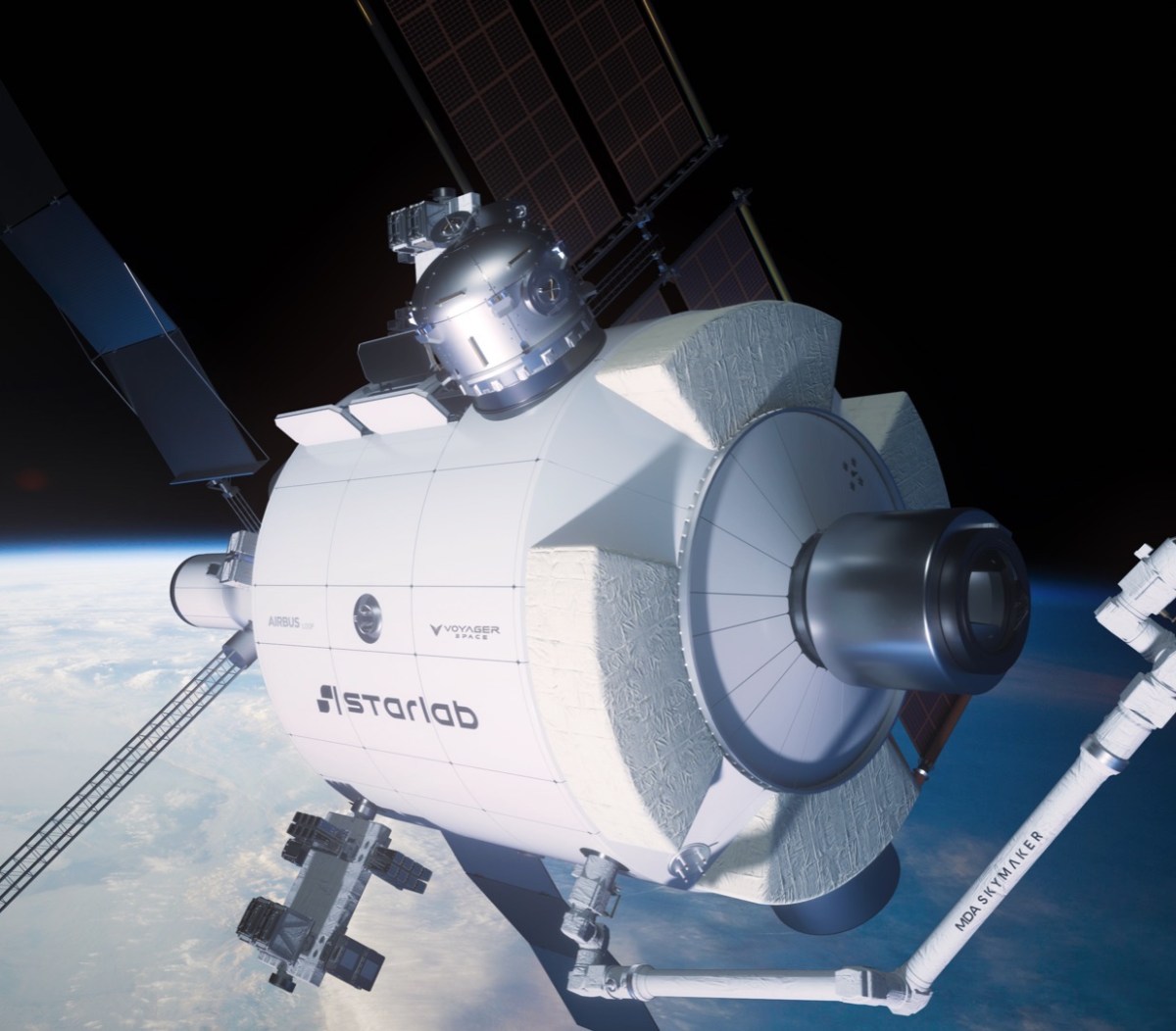
NASA currently has one such agreement with Axiom Space, which gives that company access to an ISS docking port to attach modules as a precursor to a standalone station. It also has funded agreements with Blue Origin and Starlab Space to support initial design work on their station concepts. Several other companies have unfunded agreements where NASA provides technical assistance, but not funding, to assist in work on commercial space station concepts.
The new approach would award at least two funded Space Act Agreements to companies to mature space station designs through critical design reviews and then to flight demonstrations with non-NASA crews. Formal certification of those stations for use by NASA would move to a separate phase, the memo stated.
The change appears intended to address concerns about a gap in a crewed presence in LEO after the scheduled 2030 retirement of the ISS as well as funding shortfalls. “To reduce the potential for a gap of a crew capable platform in LEO, it is important to move quickly in the acquisition using available funds,” the memo states.
The memo notes that the original plans for Phase 2 of CLD were considered a “high-risk acquisition” because of projected funding shortfalls as large as $4 billion. Moving from a contract to Space Act Agreements provides “more flexibility,” the memo states, in the event of funding changes in later years.
That approach, though, also appears to involve scaling back the required capabilities of those commercial stations. “The end capability (previously called Full Operational Capability) originally required by NASA will no longer be binding,” the directive stated. NASA documents had defined Full Operational Capability as a station capable of supporting four crew members, including two NASA astronauts, continuously, with crew increments lasting at least six months.
Instead, NASA says it will require as a minimum capability four-person crews staying on the station for one month. That would appear to shift to a crew-tended approach rather than having the stations permanently occupied, as the ISS has been since 2000.
“In addition, the LEO Microgravity Strategy, as published by NASA during the latest administration transition, is not binding,” the memo added. That strategy, adopted by NASA in December, endorsed a “continuous heartbeat” approach where the agency intended to maintain a crew presence in LEO continuously after the end of the ISS.
That came after the agency had discussions about an alternative approach, called “continuous capability,” that would retain the ability to send people to LEO, but opened the door to having gaps in an actual crewed presence in orbit. The memo suggests that NASA has shifted to that concept without explicitly using that term.
Industry officials say privately they are still studying the implications of NASA’s memo on their station plans, including how a reduced NASA presence might affect the economic viability of their plans. They said they are awaiting new details, including a formal announcement for proposals for a revised Phase 2 that the memo instructs SOMD to publish within 60 days.
In an Aug. 5 earnings call, Dylan Taylor, chief executive of Voyager Technologies, the company leading the Starlab Space partnership, did not discuss any potential changes to the CLD program. He said NASA’s budget included “quite robust” funding for the CLD programs that increases in projections for later years.
“As far as we know, the RFP is still due to come out before the end of the year, with the selection some time in 2026,” he said of the Phase 2 request for proposals. “That’s the latest information we have.” He added that Starlab was on track to complete a critical design review by the end of this year as it completes work on its Phase 1 agreement.
“We offer a once-in-a-generation opportunity through our Starlab joint venture,” he said, calling the station “perhaps one of the most compelling long-term growth opportunities in the commercial space market.”