

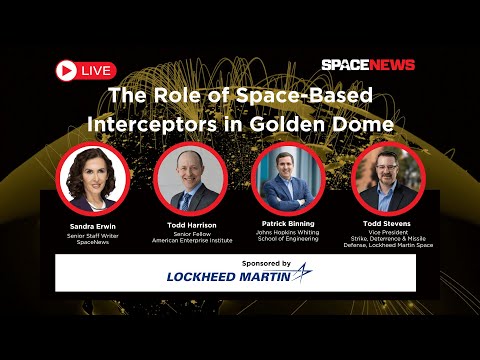
As the U.S. develops the Golden Dome missile defense architecture, one of the most controversial ideas is back on the table: interceptors in space. In theory, such interceptors could strike during a missile’s earliest phase of flight — offering a needed speed and global coverage for defense.
Advocates see space-based interceptors as the next step in layered defense, leveraging advances in propulsion, guidance and autonomy. Critics warn of enormous costs, technical complexity and the potential to escalate an arms race.
With studies underway and debate intensifying, decisions on interceptors could determine whether Golden Dome remains a sensor-driven network or evolves into a far more ambitious — and contentious — space weapons program.
Join us as we examine the promise and pitfalls of space-based interceptors, the state of the technology, and the strategic consequences of putting such defenses in orbit.
Moderator

Sandra Erwin
Senior Staff Writer
SpaceNews
Panelists

Todd Harrison
Senior Fellow
American Enterprise Institute

Patrick Binning
Johns Hopkins Whiting School of Engineering

Todd Stevens
Vice President Strike, Deterrence & Missile Defense, Lockheed Martin Space
Sponsored by


Lockheed Martin is a global defense technology company driving innovation and advancing scientific discovery. Our all-domain mission solutions and 21st Century Security® vision accelerate the delivery of transformative technologies to ensure those we serve always stay ahead of ready. More information at Lockheedmartin.com